Mastering the Cable Hammer Curl: The Clinical Guide to Thicker Arms
If you are looking to build thicker arms, pop-out veins, and a grip that won't quit, the cable hammer curl is non-negotiable. We break down the absolute clinical biomechanics of this powerful lift.
Last updated: November 22, 2025
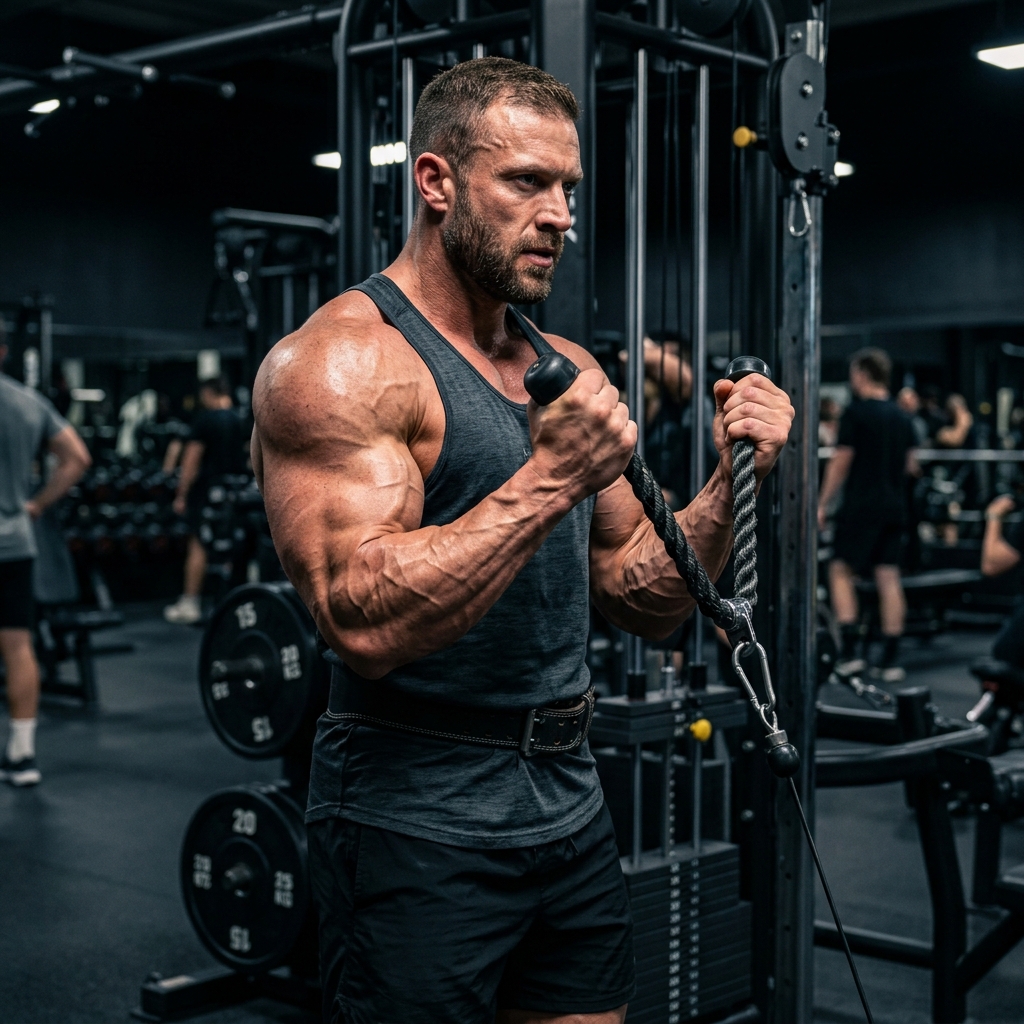
The cable hammer curl is a neutral-grip isolation exercise. It targets the brachialis and brachioradialis muscles. It recruits the long head of the biceps brachii.
Unlike dumbbells, cable systems provide constant mechanical tension. This continuous resistance curve enhances muscle hypertrophy. The neutral grip reduces joint stress on the wrist and elbow. It is a joint-friendly movement for upper body training.
Muscle Activation and Form Cues for the Cable Hammer Curl
Below is the biomechanical activation profile and execution instructions.
| Target Muscle | Anatomical Location | Primary Form Cue | Expected Hypertrophy Value |
|---|---|---|---|
| Brachialis | Deep outer arm, under bicep | Keep elbows pinned to the rib cage | Increases absolute width of the upper arm |
| Brachioradialis | Upper lateral forearm | Maintain a strict neutral grip | Builds thickness near the elbow joint |
| Biceps Brachii | Anterior upper arm (long head) | Squeeze hard at the peak contraction | Enhances three-dimensional arm peak |
| Forearm Flexors | Anterior forearm | Grip the rope stoppers tightly | Improves isometric grip strength |
Biomechanical Mechanics of Cable Tension
Free weights rely on gravity for resistance. Gravity creates a vertical resistance vector. During a dumbbell curl, tension peaks when the forearm is horizontal. Tension drops to zero when the arm hangs straight down.
Cable pulleys redirect the resistance vector. The tension aligns with the cable path. The pulley system keeps the target muscles under constant mechanical loading. This constant tension restricts local blood flow. This restriction increases metabolic stress. Metabolic stress triggers muscle protein synthesis.
To support muscle recovery after training, consume appropriate nutrients. Review configurations in our best post-workout meals guide. Pair training with diets described in our effective weight loss programs guide.
Step-by-Step Form Execution Cues
- Pulley Setup: Position the adjustable pulley at the lowest setting. Attach a flexible tricep rope.
- Stance: Stand facing the pulley. Take one step back to lift the weight stack. Keep feet shoulder-width apart.
- Grip: Hold the rope stopper ends with palms facing each other.
- Concentric Pull: Flex the elbows to curl the rope upward. Keep the torso stationary. Do not swing the hips.
- Peak Squeeze: Squeeze the brachialis at the top of the range for 1 second. Keep elbows tucked.
- Eccentric Descent: Lower the weight slowly over 3 seconds. Fight the cable tension to the starting position.
Workout Programming Variables
- For Hypertrophy: Perform 4 sets of 12 to 15 reps. Rest for 60 seconds between sets to maintain local hyperemia (blood pump).
- For Muscular Endurance: Perform 3 sets to mechanical failure. Use lighter weights for 20 to 30 reps.
- Hydration Pairing: Drink water to sustain cellular hydration during workouts. Review options in our low-calorie beverage guide.
Frequently Asked Questions
Are cable curls better than dumbbell curls?
Cables maintain constant tension across the entire range of motion. Dumbbells lose tension at the bottom and top of the curl. Both are effective, but cables maximize metabolic stress.
What muscles do hammer curls work?
Hammer curls target the brachialis and the brachioradialis forearm muscle. They also recruit the long outer head of the biceps brachii.
How often should I train arms?
You can train arms 2 to 3 times per week. Biceps and forearms are smaller muscle groups. They recover rapidly, but require 48 hours of rest between sessions.
Do hammer curls help with wrist pain?
Yes. The neutral grip matches the natural resting alignment of the wrist. It eliminates the rotational strain caused by straight-bar barbell curls.
Can I do these curls on a calorie deficit?
Yes. High-protein diets and resistance training preserve muscle mass during a caloric deficit. This helps maintain your resting metabolic rate.
About David William
Certified Fitness Coach & Nutrition Expert at IAVI Fitness
Certified personal trainer and nutrition specialist with expertise in evidence-based fitness, weight loss, and performance nutrition. Passionate about helping individuals achieve sustainable health and fitness goals through science-backed, practical approaches that fit real life.
Related Articles


Share this article: