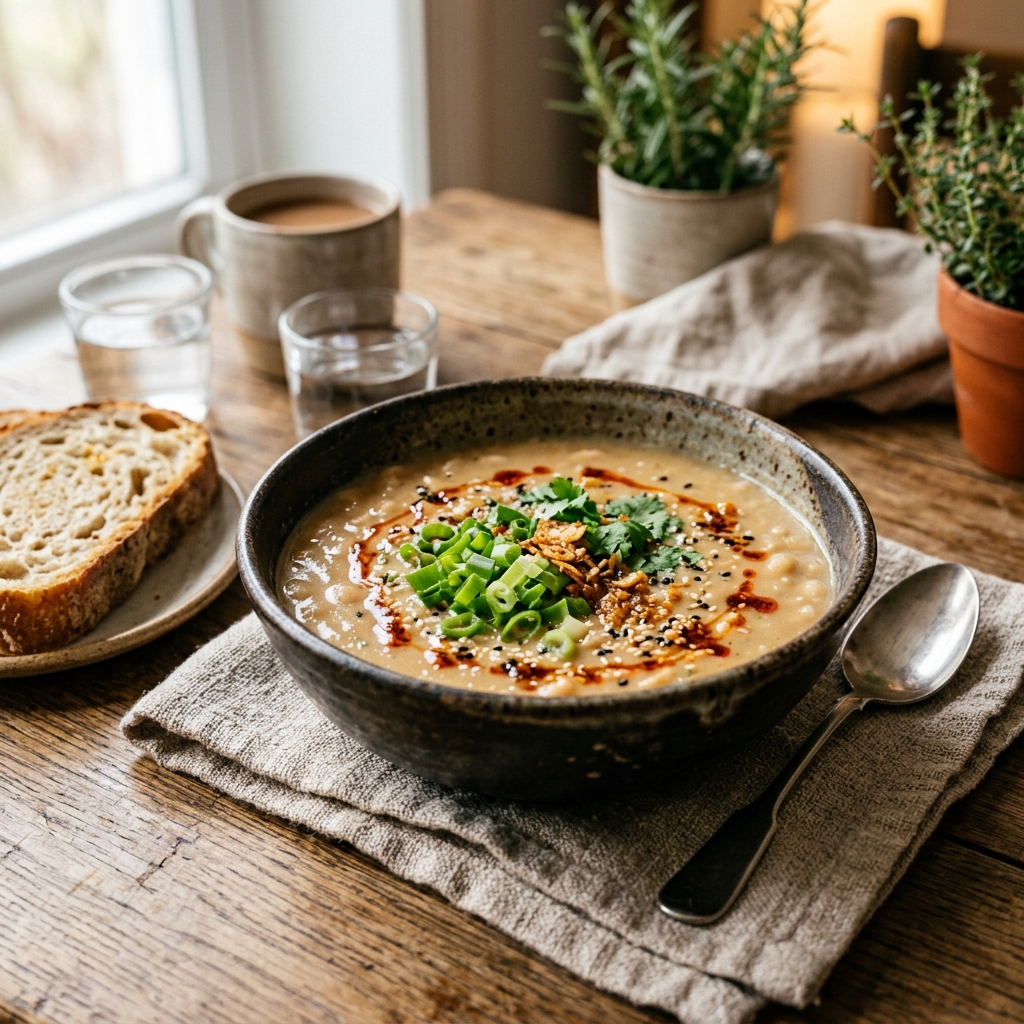
High-Protein Creamy Miso White Bean Soup (Easy + Healthy Recipe)
There’s something uniquely comforting about a warm bowl of soup. But what if that soup could be a powerful, muscle-building recovery tool? We break down the clinical science behind this recipe.
Last updated: December 5, 2025
This creamy miso white bean soup is a high-protein, plant-based recovery meal. A single serving provides 320 calories. It contains 18 grams of protein. It contains 8 grams of fat. It contains 44 grams of carbohydrates. It provides 11 grams of dietary fiber.
Cannellini beans provide complete plant proteins. Fermented white miso paste provides active probiotics. This recipe contains zero dairy. It stabilizes blood glucose and supports muscle protein synthesis.
Nutritional Profile of Creamy Miso White Bean Soup (per serving)
Below is the nutrient composition of one serving of this soup.
| Nutrient Attribute | Value per Serving | Daily Value Percentage (% DV) |
|---|---|---|
| Calories | 320 kcal | 16% |
| Protein | 18.0 g | 36% |
| Total Fat | 8.0 g | 10% |
| Saturated Fat | 1.1 g | 5% |
| Total Carbohydrates | 44.0 g | 15% |
| Dietary Fiber | 11.0 g | 44% |
| Sugars | 4.0 g | 8% |
| Sodium | 680 mg | 29% |
| Vitamin B12 | 2.4 mcg | 100% |
Essential Biological Ingredients
Use these exact ingredients to achieve the nutritional profile:
- Extra-Virgin Olive Oil: 2 tbsp (for monounsaturated fatty acids).
- Yellow Onion: 1 large (for sulfur-rich prebiotics).
- Carrots: 3 large (for beta-carotene).
- Celery: 3 stalks (for potassium and water content).
- Cremini Mushrooms: 8 oz (for umami and B vitamins).
- Garlic: 4 cloves (for bioactive allicin).
- Fresh Ginger: 1 tsp (for gingerol to aid digestion).
- Cannellini Beans: 30 oz (two cans, rinsed and drained).
- Vegetable Broth: 6 cups (low-sodium to manage blood pressure).
- White Miso Paste: 1/4 cup (unpasteurized for probiotics).
- Nutritional Yeast: 2 tbsp (for cobalamin/Vitamin B12).
- Dried Thyme: 1 tsp.
- Black Pepper: 1/2 tsp.
- Baby Spinach: 2 cups (for non-heme iron).
Step-by-Step Cooking Instructions
- Sauté Aromatics: Heat the olive oil in a pot over medium heat. Sauté the onion, carrots, and celery for 8 minutes until soft.
- Brown Mushrooms: Add mushrooms. Sauté for 6 minutes. High heat brownings create Maillard compounds that enhance flavor density.
- Activate Spices: Stir in minced garlic and grated ginger. Heat for 60 seconds.
- Simmer Soup: Add cannellini beans, vegetable broth, thyme, and black pepper. Bring to a boil. Reduce heat and simmer for 15 minutes.
- Create Creamy Texture: Transfer 2 cups of soup to a blender. Blend on high until smooth. Return the blended mixture to the pot.
- Incorporate Miso: Turn off the heat source. Whisk the miso paste with 1/2 cup of warm broth in a separate bowl. Stir this slurry and the nutritional yeast into the pot. Do not boil the miso to avoid killing the probiotics.
- Wilt Spinach: Stir in the baby spinach until wilted. Serve immediately.
Metabolic and Probiotic Benefits of the Ingredients
Each ingredient serves a specific physiological role.
Cannellini beans contain soluble fiber. Soluble fiber slows carbohydrate absorption. This prevents insulin spikes that accelerate fat storage. This aligns with guidelines in our effective weight loss programs guide.
White miso paste contains living bacteria. These probiotics populate the gut microbiome. A balanced microbiome improves nutrient absorption. It supports recovery from athletic training.
Nutritional yeast provides cobalamin (Vitamin B12). B12 is required for red blood cell formation. Red blood cells transport oxygen to muscles during exercise. This supports training, such as the exercises described in our cable hammer curl guide.
Frequently Asked Questions
Can this soup support muscle building?
Yes. Cannellini beans and nutritional yeast provide complete proteins. These amino acids stimulate myofibrillar protein synthesis. Pair this meal with options from our best post-workout meals guide.
Why should you not boil miso?
Miso contains beneficial micro-organisms. High temperatures above 70°C (158°F) denature these probiotics. Add miso at the end of cooking after removing the pot from heat.
Can I substitute the cannellini beans?
Yes. Great Northern beans, navy beans, or chickpeas are suitable substitutes. They provide similar protein and fiber content.
Is this recipe gluten-free?
Yes. Cannellini beans, vegetables, and miso are gluten-free. Check labels to ensure your miso paste does not contain barley or wheat koji.
How long does this soup keep in the fridge?
Store the soup in an airtight glass container for up to 5 days. Reheat gently on low heat to preserve the probiotic activity.
About David William
Certified Fitness Coach & Nutrition Expert at IAVI Fitness
Certified personal trainer and nutrition specialist with expertise in evidence-based fitness, weight loss, and performance nutrition. Passionate about helping individuals achieve sustainable health and fitness goals through science-backed, practical approaches that fit real life.
Related Articles


Share this article: